


A Complete Guide on Iceland Schengen Visa Application Requirements
In this article
- Introduction
- Schengen Area
- What is an Iceland Schengen Visa?
- Other Icelandic Visa Types
- Is It Mandatory to Obtain an Iceland Schengen Visa?
- General documents for the Iceland Schengen Visa Application
- Iceland Tourism/Visit Schengen Visa
- Iceland Business Schengen Visa
- Iceland Student Schengen Visa
- Iceland Medical Schengen Visa
- How to Apply for an Iceland Schengen Visa: Step-by-Step Guide
- Iceland Schengen Visa Application Fees
- What is the Average Processing Time for an Iceland Schengen Visa?
- Extension in Iceland Schengen Visa
- What Are the Rejection Reasons for a Visa and How Can I Avoid Them?
- Rejection reasons
- Tips to avoid rejection
- FAQs- Iceland Schengen Visa
- Final Thoughts
- Airport transit visa
- National visa
- Who needs a visa?
- Who does not need a visa?
- Step 1: Identification of the facility
- Step 2: Determine your visa type
- Step 3: Complete the application form
- Step 4: Gather the documents
- Step 5: Schedule an appointment
- Step 6: Visit the facility
- Step 7: Track your application
- Step 8: Collect your passport
- Points to remember
- Processing timelines
- Important considerations
- Is Iceland a part of the Schengen Area?
- Do I need a visa to visit Iceland?
- Which countries can I visit with an Iceland visa?
- Which consulate should I apply to for a visa if I visit multiple Schengen countries?
- Where can I submit my Icelandic Schengen visa?
- Can I apply for an Iceland visa online?
- What can I do if my Iceland Schengen visa is refused?
Introduction
A dramatic landscape with volcanoes, geysers, hot springs, and lava fields defines the tiny Nordic state, which has a population of approximately 390,000. The country started issuing the Iceland Schengen Visa in 2001.
The country spans over an area of 103,000 km². It is the most sparsely populated country in Europe.
Nearly 60% of the entire population lives in Reykjavik, the capital city. The capital receives energy from a geothermal power plant and is home to the National and Saga museums.
Thus, to travel to this Schengen state, you must apply for an Iceland visa. Therefore, go through the following blog post to learn about the visa essentials, including types, documents, application process, fee structure, processing time, and others.
Schengen Area
The Schengen Area refers to a territory where the free movement of persons is guaranteed. The 29 signatory States to the Agreement have abolished all internal borders in place of a single external border. In the Schengen Area, common rules and procedures are applied with regard to visas for short stays, asylum requests, and border controls. Simultaneously, cooperation and coordination between Police services and judicial authorities guarantee security. Schengen cooperation was incorporated into the European Union (EU) legal framework by the Treaty of Amsterdam of 1997.
What is an Iceland Schengen Visa?
An Iceland Schengen visa is a short-stay or Type C visa that allows the holder to enter and stay in the destination country for almost three months or 90 days. Besides, it has a validity period of almost 180 days or six months.
Surprisingly, this visa type also allows the traveler to move within the 29 Schengen countries without getting a separate entry permit.
Furthermore, a Type C visa is further categorized into the following categories based on the purpose of your trip to Iceland.
- Tourist visa
- Business visa
- Visit visa
- Medical treatment visa
- Seamen visa
Other Icelandic Visa Types
The second visa category that you can choose from when traveling to Iceland is an Airport transit visa and a National visa.
Airport transit visa
An airport transit or Type A visa is needed while transiting through Iceland to reach the non-Schengen destination country. Depending on your nationality, you may be allowed to leave or stay at the transit area of the Icelandic international airport. Furthermore, this visa type has a validity period of 24 to 72 hours.
National visa
Staying for more than 90 days is possible if you have a long-stay visa for Iceland. An alternative name for this category is Type D or National visa, which permits the holder to live in Iceland for six months or more. You can also renew it based on the visit purpose.
A Type D visa also requires you to get a residence permit.
Additionally, it has the following subtypes.
- Work visa
- Family reunification visa
- Student visa
- Research visa
- Investment visa
Make sure that the chosen visa type is aligned with the visit purpose. In case of any discrepancy, your application will either face delays or your visa will be rejected.
Is It Mandatory to Obtain an Iceland Schengen Visa?
The necessity of having an Iceland Schengen visa before traveling to the country depends on your nationality/country of origin. For this purpose, go through the following section.
Who needs a visa?
Citizens of non-EU/EEA countries are required to get a Schengen visa to visit Iceland. This is because Iceland is a part of the Schengen Area. However, the following vital exemptions are available based on the travel purpose, nationality, and residency status of the traveler.
- Nationals of Annex I countries, such as Asian, African, and Middle Eastern along with South Asian countries (Pakistan, India, Nigeria, Afghanistan), require a visa to travel to Iceland for either short or long-term purposes.
- Moreover, citizens of certain countries must hold an ATV (airport transit visa) even if they stay within the international transit area of an Iceland airport. This rule applies if they do not enter the country. These countries include Afghanistan, Bangladesh, Eritrea, Ethiopia, Ghana, DR Congo, Iran, Iraq, Nigeria, Pakistan, Somalia, and Sri Lanka.
- In some cases, family members of EU/EEA are required to provide specific visa documents. Thus, visa requirements can vary based on the nature of their residence permit and the country where they are traveling as an EU/EEA citizen.
Who does not need a visa?
The nationals of the following countries are visa-exempt. This means that they do not need a visa to travel to Iceland or any of the Schengen countries.
- Citizens of the EU (European Union), EEA (European Economic Area), and Switzerland can move freely within the Schengen Zone without a visa.
- Nationals of Annex II countries, including Canada, the United States, Japan, the United Kingdom, Australia, and New Zealand, are exempt from a visa to enter Iceland for short stays (90/180 rule). This set consists of almost 60 countries.
- If you have a valid long-stay visa or residence permit issued by another Schengen country allows the holder to visit Iceland without a visa for short-term purposes.
General documents for the Iceland Schengen Visa Application
Make sure that you bring the following documents to the application facility when applying for an Iceland Schengen visa.
Application form: The first document is the application form that you can download from the website. Read it carefully and then fill it with utmost honesty.
Iceland has also introduced the facility of filling out the Schengen Visa application electronically and then printing a hard copy.
After filling out the application form, attach two latest photos with it. Photos should be clicked in the passport format by the applicant, full-face captured with a light background.
Passport: The current passport must be valid for a minimum of 90 days beyond the validity of the requested visa.
The current passport must have been issued within the last 10 years, and it must have a minimum of 2 blank visa pages in order to affix the visa.
Other important documents are as follows:
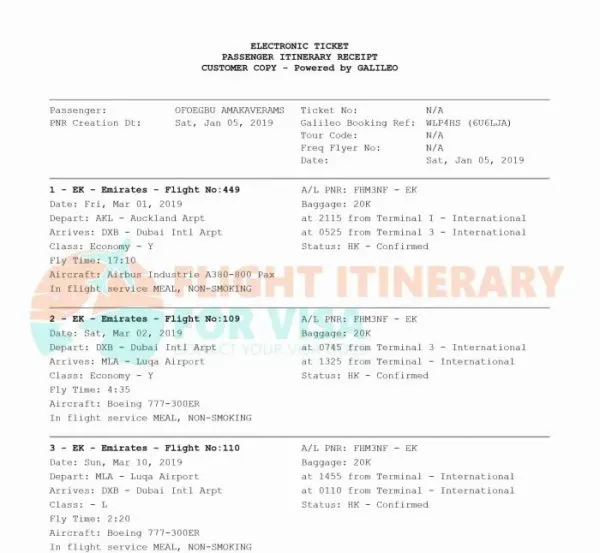
Round-trip Flight Itinerary for visa application: A verifiable document issued by an airline, travel agency, or online service provider to confirm that the visa applicant has booked/paid for a flight seat on an aircraft. 
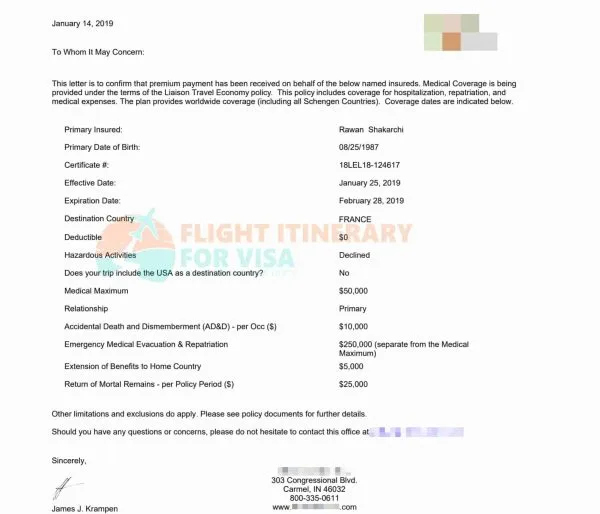
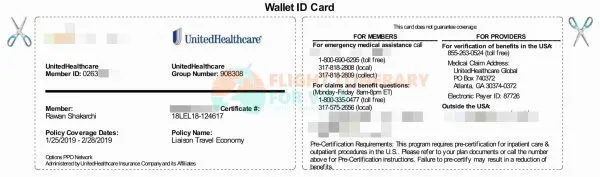
Travel Visa Health Insurance: A health insurance covering minimum expenses equivalent to 30,000 euros in case of any medical complication, accident, or repatriation after death. The insurance document should clearly mention the policy, its validity, and the benefits offered. The availed insurance should cover emergency treatments in hospitals in case of medical complications and repatriation on medical grounds, and even death. 
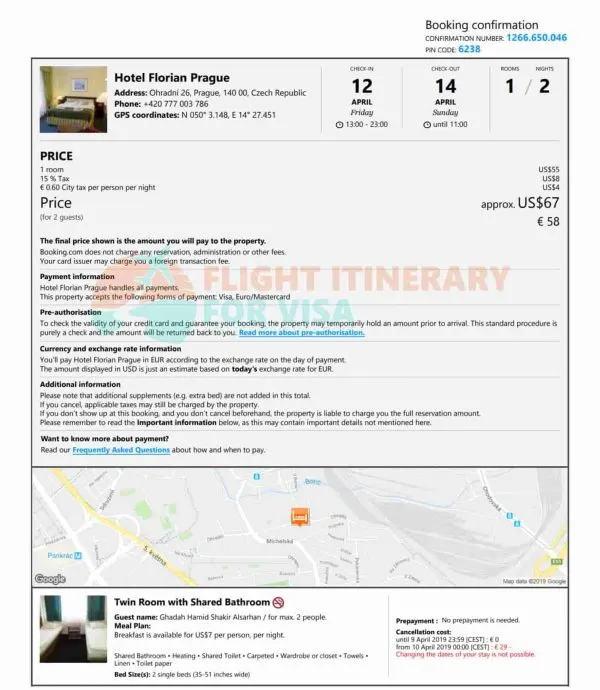
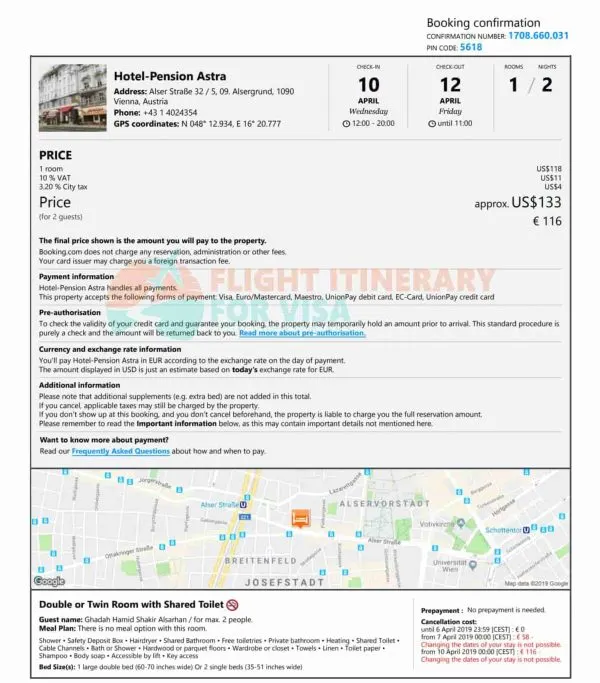
Hotel Booking Reservation/Proof of accommodation: It is a document that specifies the place/places of the applicant’s stay during the course of their visit to Schengen state/states. It includes:
A hotel/hostel booking; and
A rental agreement, and
A letter of invitation from a host at whose house you will be staying. 
Bank statement/Proof of financial means: This document is required to confirm that the applicant is financially able to manage their stay in the Schengen Area, and it includes a bank statement, a sponsorship letter, or a combination of a bank account statement and a letter of sponsorship.
Cover Letter: Cover Letter or Covering Letter is a letter sent with and explaining the contents of another document/documents or parcels of goods.
The applicant explains the following things in the Schengen Visa Cover Letter:
- The Intention of traveling to the Schengen state/states.
- Proof of civil status (marriage certificate, birth certificate of children, death certificate of spouse, ration card if applicable).
- Explaining the relation with a sponsor (if any) and the sponsorship reasons. An overview of the applicant’s flight itinerary.
- In case the applicant fails to produce a document, then they must provide the reasons and explain the alternative documents (that they might have submitted).
Affidavit of Support: Diplomatic officers demand this document if the applicant does not hold a bank account or lacks funds to support themself during their stay in the Schengen Area. In such a scenario, the applicant is directed to request relatives or friends, residing in the Schengen state, to sign a document named “Official Affidavit of Support”.
Means of subsistence: It means to provide evidence to the Icelandic Embassy or Consulate that the applicant has a sufficient amount of financial resources to bear their expenditures during their stay in the Schengen country. The applicant is bound to attest to the Icelandic Consulate or Embassy that they possess daily cash equivalent to 4,000 ISK or 28.83€.
On the other hand, the minimum cash required to enter the tiny Nordic state is 144.13€ or 20,000 ISK.
Proof of paid visa fee: €60 for adults and €35 for children from 6 to 12 years old. These fees cannot be reimbursed in case the visa application gets rejected.
If employed:
- Employment contract; and
- Current bank statement of the latest 6 months; and
- Leave permission from the employer; and
- Income Tax Return (ITR) form or Certificate of Income Tax deducted at the source of salary.
If self-employed:
- A copy of your business license; and
- Company bank statement of the latest 6 months; and
- Income Tax Return (ITR).
If a student:
- Proof of enrollment; and
- No-objection certificate from the school or university.
If retired:
- Pension statement for the latest 6 months.
If applicable:
- Regular income generated by the property proof of the last 6 months.
*Note: The signed application form must be accompanied by the rest of the above-mentioned mandatory documents and handed personally at the appropriate embassy/consulate or its representative in your home country.
Apart from the general documentation required, other additional documents should be accompanied depending on the nature of your visa application.
Iceland Tourism/Visit Schengen Visa
- Proof of sponsorship/Invitation (originally signed): It is recommended to attach the proof of sponsorship/invitation to the visa application. Immigration Authority of Iceland issues the document, and in case the applicant intends to visit more Schengen countries, a travel plan.
Documents required for an Airport Transit Schengen Visa
- Applicant must possess an authentic visa for the final country of the Schengen Area they are traveling to.
- A flight ticket for the final country of the Schengen Area that they are traveling to.
Iceland Business Schengen Visa
- Invitation letter: An applicant must attach an invitation letter issued by the company of the host country. It is pertinent here to mention that an invitation letter must contain the detailed address of the company and the complete dates of the applicant’s visit.
- NOC from employer: This letter explains the reasons for the applicant’s travel to the host nation.
- Proof of financial means: The employer or company of the host nation is bound to submit an affidavit regarding coverage of the applicant’s expenses during their stay in the Schengen state.
- Business Bank Statement: Applicant must attach the bank statement of their company for the past six months.
- Memorandum and Articles of Association
- Trade License (first issued and present renewal).
Iceland Student Schengen Visa
- Enrollment certificate: An enrollment certificate issued by the school/college/university of the host nation.
- NOC: A No Objection Certificate issued by the school/college/university of the home nation.
Iceland Medical Schengen Visa
- Medical Report: A medical report issued by the doctor, clinic, or hospital of the applicant’s home country.
- Medical Attestation: An attestation from the doctor or hospital of the host nation stating the dates of the applicant’s appointment.
- Letter of Invitation: This document details the applicant’s aims for consulting the doctor of a Schengen country, minute details of illness, along with the expected duration of the treatment, estimated expenses, and the doctor leading the medical board, and so on.
- Bank transfer slip: A bank transfer slip to confirm payment of dues in advance (for prepaid medical treatment of the applicant).
Additional documents required by the spouse of an Icelandic national visa holder
- Proof of Icelandic citizenship (ID card or consular card or certification of Icelandic nationality, or naturalization order).
- Icelandic marriage certificate.
- Icelandic family record book.
Additional documents required for Members of Official Delegations
The following additional documents are required by the members of the official delegations for acquiring a visa to Iceland:
- Official ID of the applicant
- Formal invitation copy
- Purpose of visit (meetings, events arranged by the intergovernmental organizations, and consultations)
- Expected duration of the stay
- Hotel Booking/Proof of accommodation
Other specific documents, depending on the nature of the visa
Diplomatic officers at embassies or consulates of Schengen states can demand other documents depending on the nature of the visa.
How to Apply for an Iceland Schengen Visa: Step-by-Step Guide
Getting a visa and traveling to the destination country can be tricky if you are doing it for the first time. However, the following guide will make the Iceland Schengen visa application process easy because of the step-by-step guide.
Thus, ensure that you complete the process based on your home country and the availability of the application facility.
Step 1: Identification of the facility
The first step is the identification of the application facility through which you can apply for a visa. This can be done based on the Icelandic Embassy or Consulate in your home country or the VFS Global visa application center.
After completing this step, the rest of the application steps are the same.
Step 2: Determine your visa type
Since you are applying for a Schengen or short-stay visa to travel to Iceland, select this type. However, you are also required to specify your travel purpose, i.e., tourism, business, visit, etc. This will provide a basis for the subsequent application steps.
Step 3: Complete the application form
Once chosen, proceed to download and complete the Iceland Schengen visa application form. You can get it easily from the website of the relevant embassy or the visa application center.
Make sure that you fill out the form accurately, put your signature, and avoid leaving any field empty.
Step 4: Gather the documents
The section discussed above highlighted the documents needed for an Iceland Schengen visa. Other than that, you may also be requested to provide supporting documents, considering the reason for traveling to the host country.
So, ensure that all the documents are either in English or Icelandic.
Step 5: Schedule an appointment
The next step is to book an appointment with the authorities for submission purposes. Therefore, you can do it online or by visiting the embassy in person. After that, you will receive a confirmation email explaining that your appointment is booked and the date/time of the meeting.
Step 6: Visit the facility
Visit either the embassy or VAC on the appointed day/date/time and submit your essentials, including an application form, documents, and biometric data (fingerprints and photos).
Moreover, you also have to deposit the visa fees in the available payment methods.
The authorities may also request you to attend a visa interview to provide clarity to your travel plans.
Step 7: Track your application
After completing the above steps, head back to your home and wait for the processing time. In the meantime, you can track the status of your application regularly through the online tracking channel of VFS Global. This requires you to enter the application reference number and your last name.
Step 8: Collect your passport
Once processed and approved, collect your passport from the same facility. You can also get it delivered through a courier service at an additional fee.
Iceland Schengen Visa Application Fees
As the need for the specific visa depends on the nationality of the applicant, similar is the case with the visa application fee. The exact amount depends on several factors, including:
- The nationality of the applicant
- The visa type
- The age group to which the applicant belongs
For example, you need to deposit 90 euros for an adult when applying for an Iceland Schengen visa. Besides, children between the ages of six and twelve are required to pay half of this amount, i.e., 45 euros. Lastly, minors below the age of six are FREE to travel to any of the Schengen countries.
Besides, a long-stay visa for Iceland can be 12,200 ISK (Icelandic Króna) or 90 euros. Whereas a residence permit may cost you around 16,000 ISK.
Points to remember
- The visa application fee is non-refundable, i.e., you cannot get it back even if your application is rejected.
- If you apply through a visa application center, you need to pay for the service charges as well.
- Please make sure that you check the current exchange rate for the specific amount before leaving for the visa application center.
What is the Average Processing Time for an Iceland Schengen Visa?
In the case of an Iceland Schengen visa, the typical processing time is approximately 15 working days. However, the period can be extended under certain circumstances.
Processing timelines
Review the following timelines for the processing period to get a basic understanding.
- Normally, the decisions are made within 15 days or two weeks after you submit your application to the relevant diplomatic mission.
- Besides, rare situations can extend the processing time to up to 30 days or more if additional documents or scrutiny are required.
- Lastly, in exceptional or complex cases, such as consultation with the Icelandic Directorate of Immigration or an extensive background check, the period can be increased to up to 45 or 60 days.
Important considerations
- The exact processing time starts when you submit your application, and it reaches the embassy or the consulate. Please note that attending the appointment at the relevant visa application center is not the onset of the processing time. Moreover, if you choose the option of courier services, expect extra time to transfer your documents from the VAC to the embassy.
- Moreover, peak travel seasons, e.g., April-August and December-January, can result in delays for the submitted applications due to the high volume of visa applications.
- Therefore, applicants are advised to submit their applications at least 3 to 4 weeks before the intended travel date. This will help them avoid last-minute stress. The maximum period for which you can apply for a visa is six months before your trip.
- Lastly, ensure that your application is complete and that you have provided all the mandatory and accurate documents. This is because incomplete applications are a primary cause of delays.
Extension in Iceland Schengen Visa
Immigration officials enjoy jurisdiction to extend the duration of the Iceland Schengen Visa in exceptional cases where special reasons and new facts may arise after entry in the country.
What Are the Rejection Reasons for a Visa and How Can I Avoid Them?
Visa applications are usually rejected for multiple reasons. For example, violations of the Schengen visa policies, doubts about your intent to return to your home, inadequate financial means, and application errors. However, you can avoid these mistakes to secure a successful visa outcome.
Rejection reasons
Look at the following typical reasons for a visa rejection, regardless of the fact whether you are applying for an Iceland Schengen or a National visa.
|
Reason |
Description |
|
Lack of ties |
If the visa officer is not convinced that you have enough reasons to return to your home country after the visit, this will raise concerns about your potential overstay. For instance, job, family, property, studies, etc. |
|
Insufficient funds |
Failing to provide adequate and stable financial resources to cover all the trip’s expenses (flights, hotel, daily costs, emergencies) may show that you become a burden on the public or work illegally. |
|
Incomplete application |
Mistakes on the visa application form, inconsistent information across all the submitted papers (dates, travel details, names), or missing documents can lead to quick denial. |
|
Unclear travel purpose |
If your visit purpose is vague or not supported by additional documents (missing a detailed itinerary or an invitation letter), the authorities will turn down your application. |
|
Fake or forged documents |
Submitting fake, forged, fraudulent documents, including altered employment letters/bank statements, etc., can lead to rejection and potential long-term bans. |
|
Poor travel history |
If you have a history of previous visa overstays, criminal records, deportations, etc., it may weigh heavily against your application. |
|
Bad interview performance |
Inconsistent answers with your application, nervous gestures, or inability to express your plans can raise suspicions. |
Tips to avoid rejection
If you want to avoid making the above-mentioned mistakes, ensure that you practice the following tips.
|
Tips |
Description |
|
Demonstrate strong ties |
Make sure that you provide verifiable commitments in your home country. This can be done by submitting property deeds, family certificates, and employment letters confirming your job and approved leaves. |
|
Show enough finances |
Also, submit 3-6 months' bank statements, salary slips, or income tax returns, in this regard. |
|
Ensure application accuracy |
Follow the document checklist for your specific visa type and country. Besides, ensure consistency across forms and supporting documents. |
|
Clear travel purpose |
Include a detailed day-by-day itinerary, refundable reservations, conference tickets, or an invitation letter to clarify your travel purpose. |
|
Use genuine documents |
Avoid submitting fake documents or information, as they can be cross-checked easily, and dishonesty can lead to severe penalties. |
|
Be transparent about history |
Disclose your past travel history details and criminal records honestly. Provide court clearance documents or context to show rehabilitation. |
|
Prepare for the interview |
Lastly, make sure to review your entire application before attending the visa interview. Also, practice your answers beforehand and maintain a professional demeanor. |
FAQs- Iceland Schengen Visa
Review the following frequently asked questions.
Is Iceland a part of the Schengen Area?
Yes. Iceland is one of the 29 member states of the Schengen Area, which has eliminated internal border controls.
Do I need a visa to visit Iceland?
Depending on your nationality, you may or may not need a Schengen visa. Check the section above or the official website of the Icelandic Directorate of Immigration.
Which countries can I visit with an Iceland visa?
An Iceland visa allows the holders to freely travel between the 29 Schengen countries, including Iceland, without a separate visa.
Which consulate should I apply to for a visa if I visit multiple Schengen countries?
If you have an intention of traveling to multiple Schengen countries, make sure that you apply for a visa to the consulate of the country that is your primary destination or where you will stay the longest.
Where can I submit my Icelandic Schengen visa?
Other than the embassy or consulate of Iceland in your home country, you can submit your applications in person at the VFS Global visa application center. It acts on behalf of the Icelandic embassy/consulate.
Can I apply for an Iceland visa online?
You can only fill out the Iceland visa application form online. However, you need to visit the center in person on the day of your appointment for submission purposes.
What can I do if my Iceland Schengen visa is refused?
If your visa application is refused, you will be notified of the reasons. Thus, you have two options: appeal or reapply for a visa. However, this makes it mandatory for you to address the rejection reasons first. Also, the visa fees are non-refundable if your application is unsuccessful.
Final Thoughts
An Iceland Schengen visa is the common visa type that you can get to visit the country for short stays. This requires you to specify the travel purpose, e.g., tourism, business, visit, etc. However, ensure that you check first whether you need a visa or not. This will save you from the trouble of going through the application process if you belong to a visa-free nation.
Other than that, make sure that you follow the embassy guidelines before starting the visa application process. Once done and collected, you can embark on your Icelandic adventure.
A little Bit About Us
We at Flight Itinerary For Visa simplify the visa documentation process for you by providing verifiable documents at market competitive prices. Our services include Flight Reservation/Itinerary, Hotel Bookings or Proof of Accommodation and Travel Medical Insurance . We also provide free templates for cover letters, sponsorship letters and invitation letters . Besides, we offer these services having a quality second to none. In case of any query, read our FAQs section and if the ambiguity persists, feel free to contact us through our 24/7 Live Chat Box.
Furthermore, we provide in-depth peep to our audience regarding ever-evolving and ever-changing visa’s rules and policies through our Blog section. If you want to have proper acquaintance with visa policies, visa documentation, visa requirements or any other related topic, just click on our Blog section and type the keyword (s) in the search box to get detailed answers to your queries.